The CFO Alliance Experience at IMA26: The CFO Who Executes

Published on July 2, 2026

Three days in Tampa. Eight sessions. One theme that CFOs actually feel in their bones right now: execution.

From June 15 to 17, members of The CFO Alliance gathered at the JW Marriott Tampa Water Street for the 2026 CFO Alliance Experience. The theme was The CFO Who Executes, and the room held up its end of the bargain. Every session was interactive. No one just sat and watched slides go by. CFOs worked through real cost trade-offs, ran a live ransomware tabletop exercise, argued about who should own AI governance, and left with something they could apply the following Monday morning.

And on Tuesday night, everyone traded conference badges for cigars at a Cuban-themed offsite that is already the stuff of next year’s stories.

Here is the full recap — the sessions, the laughs, and the learnings.

Join The CFO Alliance

Day One: Framing the Execution Agenda

Monday set the foundation. The lens for the day was personal: cadence, prioritization, and the structures that either support execution or quietly strangle it.

10:15 AM·The CFO as Chief Execution Officer

The day opened with a session on cadence over heroics. The core idea: execution decays when it depends on one person’s willpower instead of a repeatable rhythm. One of the week’s most useful frameworks came out of this track, built around four roles a finance leader can play on any initiative: driver, promoter, sponsor, or governor. As one facilitator put it: “It is not your role to drive execution in every strategic initiative. It is your role to know what your role should be.”

“Nose in, hands out.”

11:45 AM·The CFO's Pivot Point

This was a working session on what CFOs actually stop, pause, or fund next. Ilana Esterrich, CFO of Planned Parenthood Federation of America, and Aaron Wilkins, CEO and co-founder of MoveWize, walked the room through a five-layer decision framework: mission, positioning, values, principles, and a practical decision filter.

Tables worked through their own “must-haves” and “not-must-haves,” a distinction Esterrich uses to stop mission-driven organizations from saying yes to everything.

“A value that has never said no is an intention, and intentions don’t result in payoffs.”

— Ilana Esterrich

2:30 PM·Designing for Delivery

The final session of the day tackled the structural stuff: ownership, decision rights, and where good initiatives quietly stall. Tables put real numbers on their own organizational friction — one table landed on a six-figure cost for a single stalled data initiative — and worked through a stop-start-continue exercise. Every participant left with one specific thing to stop, one thing to start, and a thirty-day checkpoint on their calendar.

“Nothing accelerates, nothing starts, without stop.”

— Matthew Keller

Day Two: Execution Under Pressure

Tuesday was the core execution day, built around cost, technology, and risk. This was also the day energy started to build toward the evening’s Cuban Experience, and it showed. Facilitators were doing hallway interviews between sessions, and by the afternoon half the room was already asking about cigars.

10:15 AM·The CFO Who Executes

Hernan Rizo, CFO of Titan International, opened with a blueprint for cutting costs without cutting growth. His framing was direct: cost discipline is not just about cash, it is about valuation. A company running a 20 percent EBITDA margin that restructures costs by 10 percent adds roughly a third to the value of the business — more impact than most sales wins or new product launches deliver on their own.

Rizo split the room into functional teams (ops, payroll, “everything else”) to build a live cost playbook covering procurement, inventory, overtime, insurance, and vendor contracts. The best story of the session came from a member sharing how a former colleague, Tracy Williams, got her team to find cost efficiencies not by asking them to cut costs, but by asking them to imagine their entire distribution network had been wiped out overnight and to rebuild it from scratch. The reframe worked because nobody wants to “go find cuts,” but everybody wants to solve a crisis.

“The best time to talk about cost is now. Always now.”

— Hernan Rizo

11:45 AM·Technology as an Execution Multiplier

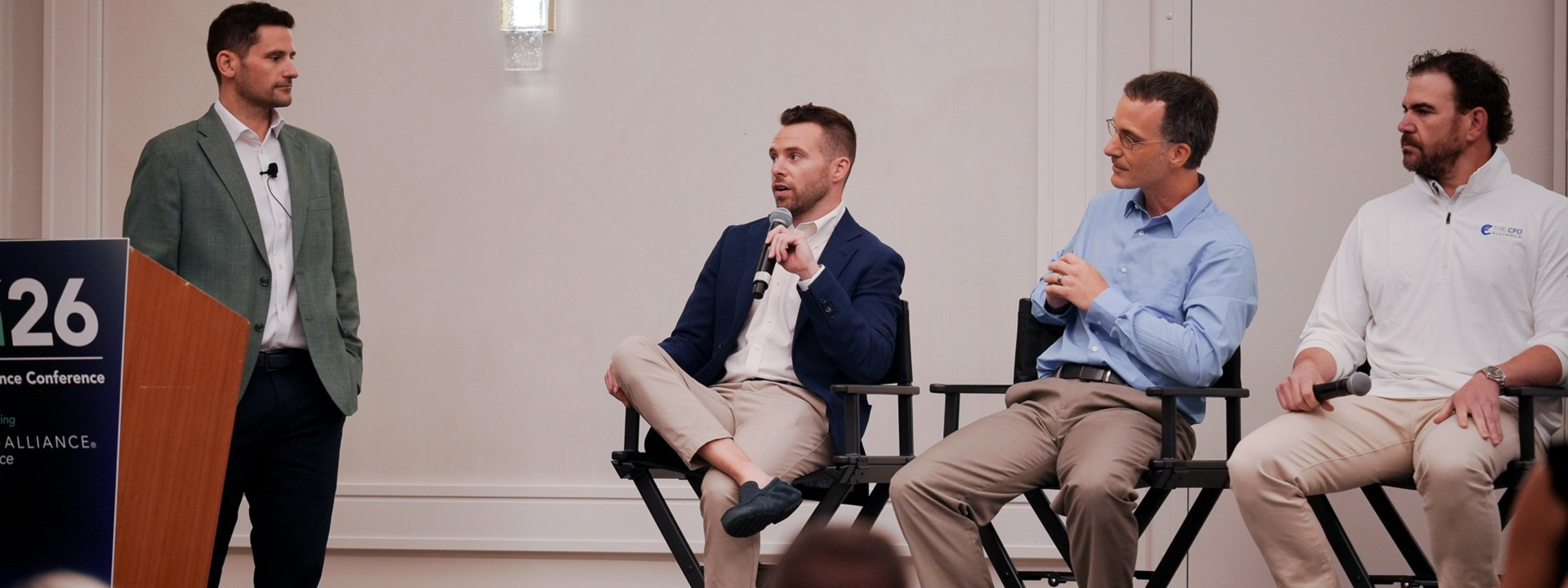
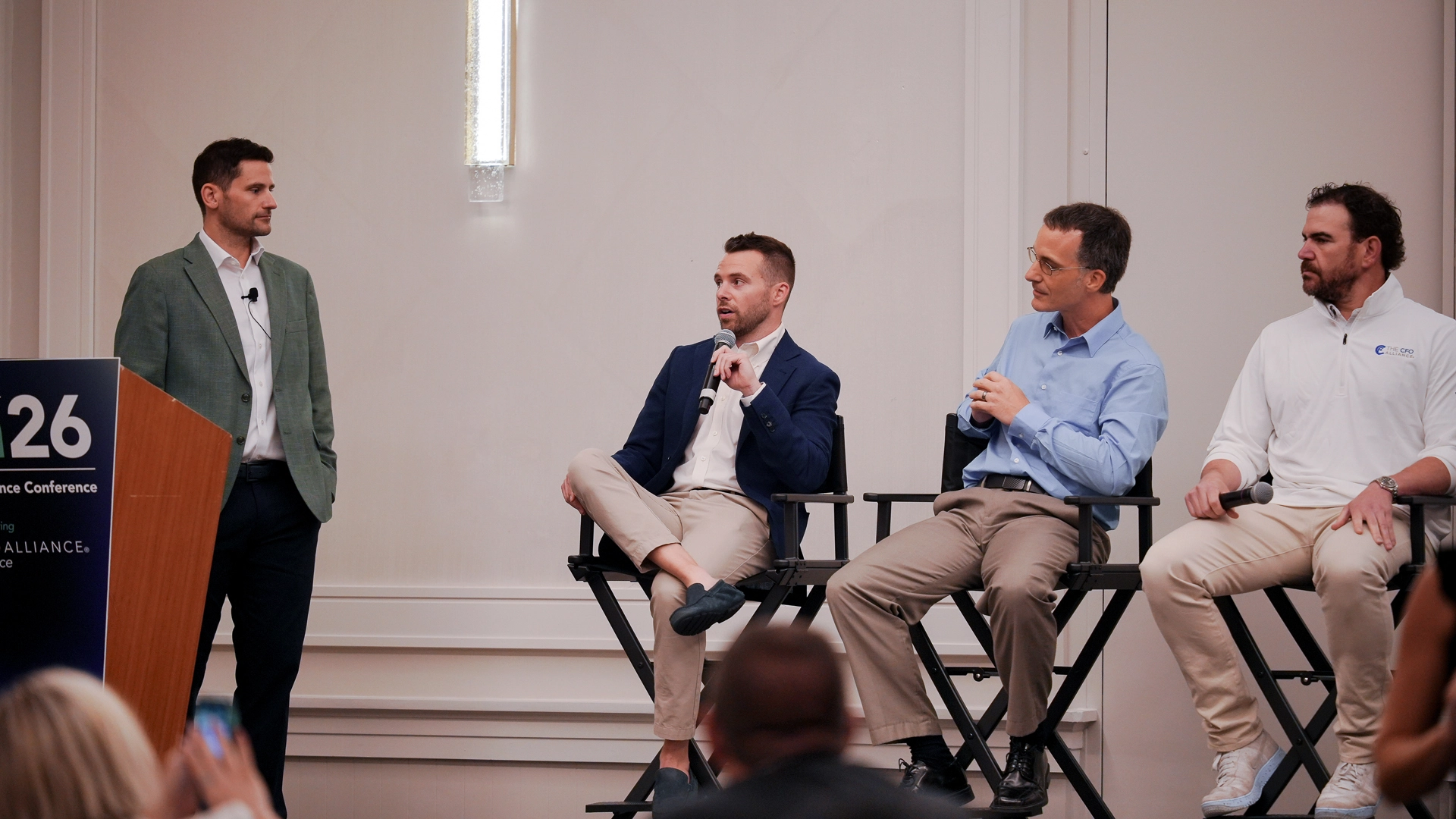
A panel discussion featuring NetSuite dug into what happens after go-live: adoption as a managed outcome, integration discipline as a cost and risk control, and how CFOs actually govern the systems they fought so hard to buy.

2:30 PM·Risk That Accelerates

Execution

This one turned the room into a boardroom under fire. Bryan Lapidus, Director of the FP&A Practice at the Association for Financial Professionals, teamed up with cybersecurity incident response experts from Oak Trust Group for a live tabletop exercise. Attendees drew roles — CEO, CFO, head of sales, general counsel — and walked through a simulated breach at a fictional financial firm in real time, from the 6 AM emergency call through a ransom demand and a board-level pay-or-don’t-pay decision.

It was equal parts gripping and funny (the “in-character” negotiating got competitive fast), but the lessons were serious: pre-negotiate a relationship with a ransom negotiator and a cyber insurer before you need one, build vendor cybersecurity attestations into every contract, and know your business continuity plan cold.

“Planning you do ahead of time is what allows you to move fast during the incident itself.”

See What Members Are Saying About IMA26 in the Member Hub